The Second Syrian Women’s Rights Civil Society Conference in Brussels
The conference provided a timely platform for representatives from over 35 Syrian women’s rights and human rights civil society organisations to collectively articulate their vision for reinforcing women´s participation and women´s rights at all levels of the reconstruction process in and for Syria: one grounded in gender equality, accountability, and equal citizenship and civic peace. The discussions were anchored in years of grassroots mobilisation, accumulation of legal and social expertise, and the ongoing implementation of the Common Agenda to Combat Violence Against Women and Girls as a Main Barrier to Women´s Participation (The Common Agenda) developed in consultations with over 250 actors across Syria in the frame of the same project.
On the 24–25th of June 2025, the Second Syrian Women’s Rights Civil Society Conference: Implementing the Common Agenda to Combat Violence Against Women and Girls and Promote Inclusive Peacebuilding in Syria was held in Brussels. Organised in the frame of the project Implementing the Common Agenda to combat VAWG and promote inclusive peace building processes in Syria implemented by EuroMed Feminist Initiative (EFI) in partnership with Musawa, Dawlaty, and Zoom In, and funded by the European Union, the event brought together more than 60 Syrian and international stakeholders from the European Union, the European Parliament and the Office of the Special of the United Nations Secretariat General for Syria, as well as international organisations to reaffirm the central role of women in Syria’s reconstruction and transition toward democracy, peace, and equality.
The conference provided a timely platform for representatives from over 35 Syrian women’s rights and human rights civil society organisations to collectively articulate their vision for reinforcing women´s participation and women´s rights at all levels of the reconstruction process in and for Syria: one grounded in gender equality, accountability, and equal citizenship and civic peace. The discussions were anchored in years of grassroots mobilisation, accumulation of legal and social expertise, and the ongoing implementation of the Common Agenda to Combat Violence Against Women and Girls as a Main Barrier to Women´s Participation (The Common Agenda) developed in consultations with over 250 actors across Syria in the frame of the same project.
In the opening statement, Ms. Fadia Habib, EFI Senior Syria Program Manager, stated that “this historic moment in Syria is not the end of the struggle, but the beginning of responsibility. Responsibility for ensuring that the sacrifices of the past are not erased, that tyranny is not allowed to return in any form, and that justice, equality, and dignity guide every step of the transition ahead.”
Mr. Alessio Cappellani, Head of Division for Middle East– Egypt, Syria, Lebanon and Jordan in the European External Action Service (EEAS) stressed the importance of turning principles into practice: “The challenge that we have now is that what is being said in the political declaration is implemented in the Syrian reality.”
Ms. Najat Rushdi, Deputy Special Envoy of the United Nations Secretary-General for Syria, acknowledged the courage and leadership of Syrian women. “The cause of Syrian women is the cause of all Arab women, of all Mediterranean women. Syrian women have always been a source of inspiration and an example to us all. Women were the first ones who took the streets and called for political and civic rights.”
Throughout the two days of the conference, the participants discussed most urgent issues linked to the role and action of women’s rights and women-led organisations in promoting and building civic peace, in addressing transitional justice and accountability from gender perspective, and in advocating for gender sensitive constitution and legislation as a pre-condition to effectively addressing VAWG, enabling women’s participation and thus building sustainable peace in Syria.
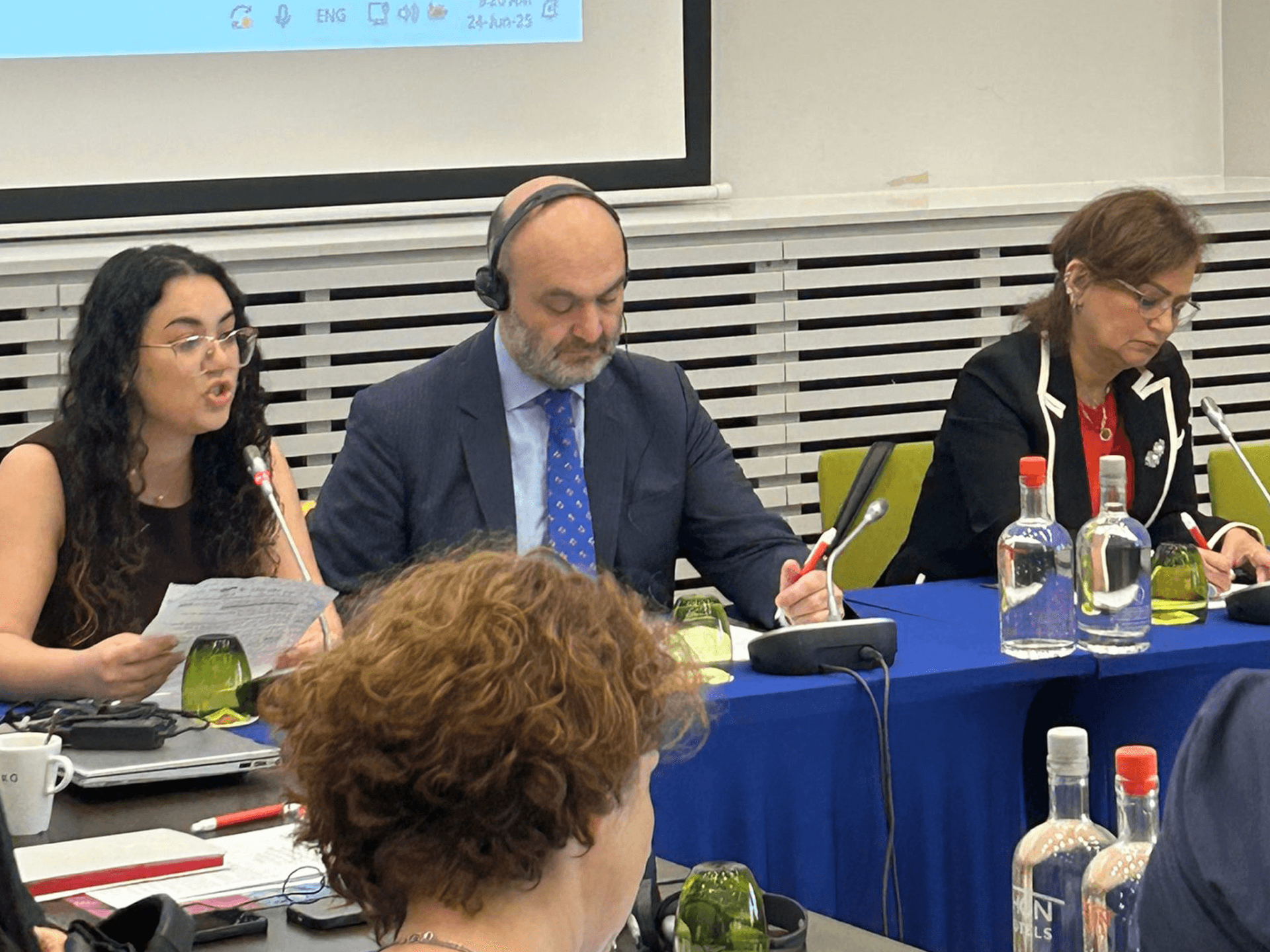
The outcomes of the local community-led dialogues organised to discuss the Common Agenda were presented by project partners during the first panel. The panellists Ms. Souad Abbas, Program Director in Dawlaty, Mr. Mustafa Kentar, Executive Director of Zoom In, and Ms. Maya Alrahabi, Director of Musawa, shared a common concern that during the dialogues, women participants expressed fear of voicing their opinions due to the bullying and backlash often faced by women who speak out on public issues. However, all underlined the positive reception of the Common Agenda among the communities as a tool to both raise awareness and discuss local solutions to combating VAWG.
Furthermore, Mr. Faek Hweije, Legal Expert, Executive Director of Equal Citizenship Center (ECC), underlined that the ECC, together with a broader participation of the civil society has developed a policy brief on the need of developing and adopting a comprehensive legislation on VAWG and reminded that Syria now is included in the 2024 Regional Index of VAWG which has 9 countries in the Middle East and North Africa Region. Dr. Roula Baghdadi, Executive Director of Dawlaty, emphasized that the advocacy work of the civil society for a gender sensitive constitution has a long history and underlined that now it is important more than ever that this work consolidates and goes to another level – dialogue and discussion with the transitional government, to make sure women´s participation and women´s rights are not absent. Ms. Sawsan Zakzak, Co-founder of Coalition of Syrian Women for Democracy underlined the long-term struggle of the women´s rights activists and organisations to strengthen women´s participation in all stages and at all levels for a democratic transition in Syria.
One of the milestones of the conference was the presentation of the Handbook on Gender-Sensitive Reconstruction in Syria, published by EFI and developed in consultation with diverse Syrian experts. It outlines a roadmap for Syrian decisionmakers, donors and international organisations, and civil society organisations committed to building a peaceful, inclusive, and rights-based future. The handbook was presented by the two authors, Dr. Ibrahim Daraji, Constitutional Expert, Professor of International Law and Ms. Farah Hweije, human rights Researcher who discussed the legal and institutional tools and practical steps the handbook offers for integrating a gender lens into the reconstruction process.
Each session was followed by a lively open discussion which helped participants to develop concrete recommendations for ensuring that Syria’s reconstruction is inclusive, accountable, and gender responsive. These include the application of a gender lens across all phases of reconstruction, the institutionalisation of women’s participation in transitional justice processes, and the allocation of no less than 30% of public and donor funding to feminist and women-led organisations. Syrian activists reaffirmed the need of gender sensitive legislation, such as the enactment of laws guaranteeing equitable housing and land ownership rights for women, and reforms to the Political Parties Law to ensure women’s representation.
During the second day, these recommendations were developed by the three working groups and presented to relevant stakeholders from the EU, UN bodies including the office of the UN Special Envoy to Syria, EU Members of Parliament as well as international organisations. The Syrian presenters underlined that the recommendations were addressed to the Syrian Interim Government, international donors, UN entities, and the broader international community. They emphasised that these recommendations underscored that the transition must ensure that Syrian women’s rights activists´ demands are not only heard but also reflected in constitutional texts, legal reforms, reconstruction plans on all levels and in all accountability mechanisms, so that the transitional process does not replicate the same structures of exclusion and violence that brought Syria to collapse.
Boriana Jonsson, Executive Director of EuroMed Feminist Initiative in her closing remarks underlined EFI long term commitment to the Syrian cause, since the peaceful revolution of 2011, and the necessity to continue providing solidarity and support to the Syrian partners on all levels, more than ever now, when a transition is a fact.
Date
Category
News
"")